



USGBC launched the Living Standard campaign in Spring 2019 in an effort to change the way we approach sustainability conversations – beyond materials, construction, and efficiency – and connect to people. The Living Standard encourages the use of storytelling to emphasize the personal impact of environmental threats and climate risks and how they relate to the building industry. When we frame sustainability through stories and connect to more intimate areas of our lives – such as our loved ones or personal health – the impact can quickly multiply through the connection it creates.
The Living Standard offers a Toolkit that outlines six methods to reshape our conversations and increase the effectiveness of the communication:
1. frame the issue,
2. be concise,
3. use key messages,
4. offer a call to action,
5. be strategic with your words,
6. and use images.
Many stories are linked to environmental threats such as natural disasters – a number of which are right in our backyard and affect our health, family, and friends. In Northern California, we have experienced devastating wildfires over the past three years, which have decimated communities and created unhealthy air events across the state. By connecting local experiences to the global issue of climate change and climate risk, we can present the issue in a more relatable manner. While recognizing that real challenges are facing our environment and our world today, we can shift our way of addressing the challenges and connect through local storytelling.
“Stories are up to 22 times more memorable than facts and figures alone.”
Halie Colbourne, Sustainability Associate, BCCI Construction
BCCI Sustainability Associate and Co-Chair of the USGBC’s Northern California Rising Leaders committee Halie Colbourne recently hosted a sold-out Rising Leaders event about the power of storytelling – how you can make complex topics more relatable, and more importantly, impactful.
Many manufacturers focus on storytelling to market their products. An example of this is Humanscale’s Smart Ocean task chair, which is a sustainable edition of their well-known Diffrient Smart Chair and is comprised of recycled nylon pellets, which were once recycled fishing nets. The company partnered with Bureo, a firm that works with fishermen along the Chilean coast to collect and recycle end-of-life fishing nets. The nets are then converted into new, responsible products such as the Smart Ocean chair. Humanscale’s customers have the opportunity to purchase a reputable, quality task chair while simultaneously taking a stance on ocean plastic pollution prevention. Many customers are driven to support products with inspirational stories and a net-positive impact, such as Humanscale’s, because they can make a meaningful environmental impact while still fulfilling their product needs.
USGBC’s LEED certification also supports the importance of storytelling through the LEED Innovation: Green Building Education credit. This credit encourages projects to highlight their sustainability narrative through a signage program, a case study, or a guided tour. Since most LEED credits are highly technical, our team helps craft client’s stories through an educational lens, making their sustainability journey approachable while showcasing the value of their hard work.
Through our expansive library of project case studies, we utilize storytelling to inspire clients, projects, and teams so that they may choose to prioritize sustainability and build more sustainably. Many of Bay Area companies are energized to pursue and pioneer innovative green building practices. And often, they are excited to share their journey with employees and industry peers, establishing an important story of sustainability through benchmarking, innovation, and market trends.
If you want to learn more about USGBC’s Living Standard campaign, check out our blog summary from this year’s annual regional GreenerBuilder conference.
Inspiration and Connection
Halie Colbourne, Sustainability Associate | BCCI Construction
Fresh off of the Living Standard Town Hall Series, the pre-GreenerBuilder kick-off event hosted at Perkins+Will’s San Francisco’s office, Mahesh Ramanujam, president and CEO of the U.S. Green Building Council, shared the impact of storytelling to engage a broader audience about the importance of reversing climate change. To get a pulse of people’s thinking about environmental issues, the Living Standard team surveyed focus groups across five regions in the U.S. Only 11 percent of people surveyed associated the term ‘green buildings’ strongly with the environment. An overwhelming majority did not understand the correlation of sustainable building with lessening the impact on the environment and reducing greenhouse gas (GHG) emissions. Moreover, many terms used by the sustainability and green building communities were viewed as highly politicized, such as ‘climate change,’ ‘climate movement,’ ‘global warming,’ and ‘climate risk.’ Those surveyed resonated with more favorable terms such as ‘Mother Nature,’ ‘sustainability,’ and ‘green communities.’
During the Greenbuilder Opening Keynote, Paul Hawken asked why 99 percent of the world is disengaged with the climate conversation. He believes that to reverse climate change, we need to address the country’s current health needs, not our existential threat. In fact, 65 percent of survey respondents don’t believe the environment is healthy. Research has shown for some time now that changes in climate have altered people’s health, families, and communities, and when messaging is related to those issues, it’s personal, and people pay attention.
Advance Sustainable Building: Counting Carbon
Matthew Koester, Sustainability Coordinator | BCCI Construction
The Decarbonization Track featured a rich lineup of panels covering methods of carbon reduction in both organizational operations and cutting-edge projects. The Building Decarbonization Coalition defines decarbonization as removing greenhouse gas emissions from energy use and moving to clean energy sources for building energy. Decarbonization is not just about building energy use, but also involves embodied carbon or the carbon required to manufacture and install construction materials. Embodied carbon often consists of 75 percent of the building’s complete lifecycle of emissions, overshadowing the operational carbon singled out in energy efficiency measures. The international concrete industry is responsible for seven percent of global emissions alone.
BCCI’s Sustainability team is already working on implementing a few of these practices in an effort to reduce and measure carbon outputs:
- Reducing embodied carbon in specs: Early engagement and working with the design partners to specify materials for environmental impact is key to reducing embodied carbon on a project. A recent BCCI tenant improvement project, for a confidential financial firm, approached reducing embodied carbon from spec through install. The results of our teamwork and collaboration showed the reduced embodied carbon impact on specified materials compared to the baseline for concrete, metal, and carpet tile to name a few products. We were also able to use these findings as a pilot pathway for the LEEDv4 Interior Life Cycle Analysis credit.
- Measuring carbon: BCCI plans to incorporate the use of the EC3 (Embodied Carbon in Construction Calculator) tool to help clients and design partners to develop less carbon-intensive strategies for materials. By tracking carbon, we can evaluate the environmental impacts of high-carbon materials such as paint, steel, concrete and carpet tile with more accuracy, help our clients meet their internal sustainability goals and, and educate stakeholders about the carbon impact of buildings. In addition, specifying less carbon-intensive materials can sometimes reduce overall material costs.
- Understanding local codes related to natural gas: The City of Berkeley passed a new ordinance banning natural gas lines in new single-family homes. And now there are about 60 cities and towns across California, including San Jose, that are considering building code measures that would promote the use of electric appliances as a way to reduce greenhouse gas emissions. In the commercial construction market, Adobe just broke ground on a new all-electric office tower in San Jose. BCCI is continuing this conversation with our clients to encourage the use of electric and clean energy for power, especially for new construction.
“If humanity changed the climate by mistake… We can change it with intent.”
Paul Hawken, Environmentalist, Entrepreneur, Author and Activist
Whether taking measurable steps towards improving real estate programs or making small changes in your daily life, we all have a responsibility in the way we interact with our environment. If we shift our perspectives, even just slightly, the impact we can have on the earth is profound. Many incredible thought leaders in the green building community share their stories to inspire others and take action. BCCI will continue to tell our stories to inspire other projects towards innovative, sustainable, and inspiring buildings of the future.
Learn more about the GreenerBuilder Conference here.
The ILFI truly “believes regenerative design can only happen when all voices are brought to the table,” and we are embracing this in our relationships and company. Two initiatives we’re passionate about include:
Make your company JUST
BCCI is committed to ILFI’s JUST label, a social justice program that we obtained in 2014 and recently recertified in 2019. JUST allows companies to publicly disclose, benchmark and optimize their performance in terms of equity and justice. Transparent policies help enhance employee engagement and can lead to improved retention rates and employees’ sense of belonging. JUST 2.0 was launched at the conference, and will be a requirement in the Inclusion imperative of the Living Building Challenge (LBC). BCCI is passionate about engaging with JUST in the marketplace. Learn more about our journey here and check out our ILFI JUST Case Study highlight here.
Accelerating the LBC
While Living Building Challenge (LBC) is becoming an industry standard for high-performing, intentionally designed buildings, there are only a handful of projects in major metropolitan areas. Accelerator programs are filling the gaps to connect policy makers, the AEC industry and ILFI Collaborative members in providing resources for LBC. While robust programs that cover certification costs and provide tools in expertise exist in King County, Washington and Sacramento, California, the Bay Area has yet to catch up. BCCI’s sustainability team is involved in the San Francisco Bay Area Collaborative, which is exploring ways to begin an accelerator program in the region. By providing the initial funding and expertise to begin, we believe that we could drastically increase registered LBC projects in the Bay Area. Through our involvement, we can not only stay ahead of client demand, but also of the green building regulatory atmosphere that is taking cues from the Living Building Challenge. For example, San Francisco’s Mayor London Breed committed the City to four key policy pledges, one of which is net zero energy. We will continue to watch how embodied carbon and deconstruction evolve in the regulatory pipeline.
Our team committed to staying abreast of LBC’s growth in standards and project types. We’re excited to spread the message and inspire our clients and stakeholders. As the Bay Area Collaborative discusses a regional accelerator program, we’ll be here in action and support.
The International Living Future Institute is part nonprofit, part think-tank and part regenerative design framework. The institute’s most prominent rating system, the Living Building Challenge (LBC), has congruent aspirations to other systems. Like LEED, LBC strives to reduce our impact on the environment by encouraging commissioning and efficient water fixtures. Parallel to WELL, LBC underlines the importance of human health in facilitating healthy lifestyle choices and less toxic material selection.
The ILFI and LBC, however, move past LEED and WELL in beckoning a paradigm shift in how we consider green building. Instead of innovating within established norms, the breakouts, keynotes and networking sessions at Living Future were oriented around building in ecologically and socially restorative ways. The ILFI is interested in how structures can enhance and restore systems in communities, whether it involves water cycles, embodied carbon in materials, urban agriculture or energy storage. The LBC’s framework allows designers, architects, and contractors to step outside of the box.
Additional Resources:

https://trimtab.living-future.org/press-release/lbc4/
https://living-future.org/lbc4/core-basics/
Kena David, BCCI’s Director of Sustainability, began an hour-long seminar by asking participants to write down how they think “well-being” looks, feels and sounds. The goal of this exercise was to understand that the WELL Building Standard was designed to benefit people in the built environment.
On average, humans spend 92% of their lives indoors. According to the Center for Disease Control and Prevention, of all the factors that influence an individual’s health and well-being, the physical environment is the most significant factor. In response to this, the WELL Building Standard allows us to transform the spaces we occupy and everything within them to be more healthful. By applying a holistic approach to health and wellness, the WELL Building Standard addresses seven core concepts that affect human health within the built environment: air, water, nourishment, light, comfort, fitness, and mind.
When a work environment is designed and built to the WELL Building Standard, both employees and employers benefit. The issues and impacts of light specifically stood out during the seminar. Light levels in the work environment affect the body’s circadian rhythm, which can then impact sleep patterns and ultimately productivity during working hours. One of the optimizations in the light concept is to locate workstations near windows, not only for access to daylight but also so employees can see the outdoors. Natural light and views of nature are both linked to productivity and increased alertness
Another intriguing WELL core concept is that of comfort as numerous factors influence a feeling of comfort in the work environment. Uncomfortable task chairs and workstations can lead to musculoskeletal disorders such as back pain, neck pain, and osteoarthritis. Fortunately, ergonomic furniture options are plentiful and affordable. Furthermore, indoor temperatures that are either too warm or too cold and distracting noises can also cause discomfort and impact productivity. Maintaining a pleasant indoor temperature and addressing acoustics with sound masking systems and absorptive materials can greatly reduce distractions.
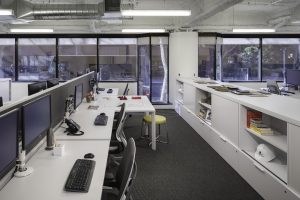
The International WELL Building Institute (IWIBI), began their research and development of standards in 2008. Six years later, in October 2014, version 1 of the WELL Building Standard was launched. Since then, over 1,200 projects have been certified, and there are now 4,000 WELL Accredited Professionals worldwide. A detailed process must be followed to get a project WELL certified. The document submission, performance testing, visual verification, and spot check steps are the same for every project; however, the time and money spent can vary depending on the project typology, size, location, choice of materials, and certification goals. Optimal project outcomes occur when the conversation about WELL certification begins very early on, during programming or even before an owner has selected a location. Early alignment among all stakeholders and project consultants can help save on real estate, design, engineering and construction costs.
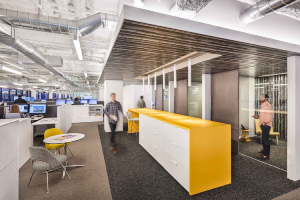
BCCI is proud to have our San Francisco headquarters WELL v1 Silver certified under New and Existing Interiors, the first project in San Francisco to achieve WELL certification. We are currently targeting WELL certification for the recent build-out of our new South Bay office in Mountain View. Learn more about WELL here.